In a workforce shaped by rapid change, shifting expectations, and constant competition for talent, organizations can no longer afford to treat learning as a one-time event. Employees want to know one thing early on: What’s next for me here?
The organizations that answer that question well are the ones building cultures of learning that stretch from day one through career advancement, not just compliance checklists or annual training reminders.
Learning is no longer an HR initiative. It’s a business strategy.
The most effective learning programs do not live in shared drives or forgotten onboarding decks. They live inside the everyday employee experience.
When learning is embedded into how people work, grow, and get promoted, it becomes a real driver of outcomes. Teams ramp faster. Managers feel more confident leading people. Compliance risk decreases. Engagement and retention improve.
First impressions matter, especially in the first 90 days. But too often, onboarding is where learning peaks and then quietly disappears.
A modern learning culture extends onboarding into:
• Role-based development
• Manager coaching and leadership growth
• Ongoing performance conversations
• Clear advancement pathways
Employees don’t disengage because they lack policies.
They disengage when they can’t see progress.
A learning-first organization does not overwhelm employees with content. It delivers the right learning, at the right time, for the right role.
That means:
• Clear learning paths tied to job responsibilities and growth
• Training that supports both compliance and capability
• Development that evolves as employees do
• Visibility into progress, not guesswork
When learning is personalized and intentional, employees stay engaged and managers stay aligned.
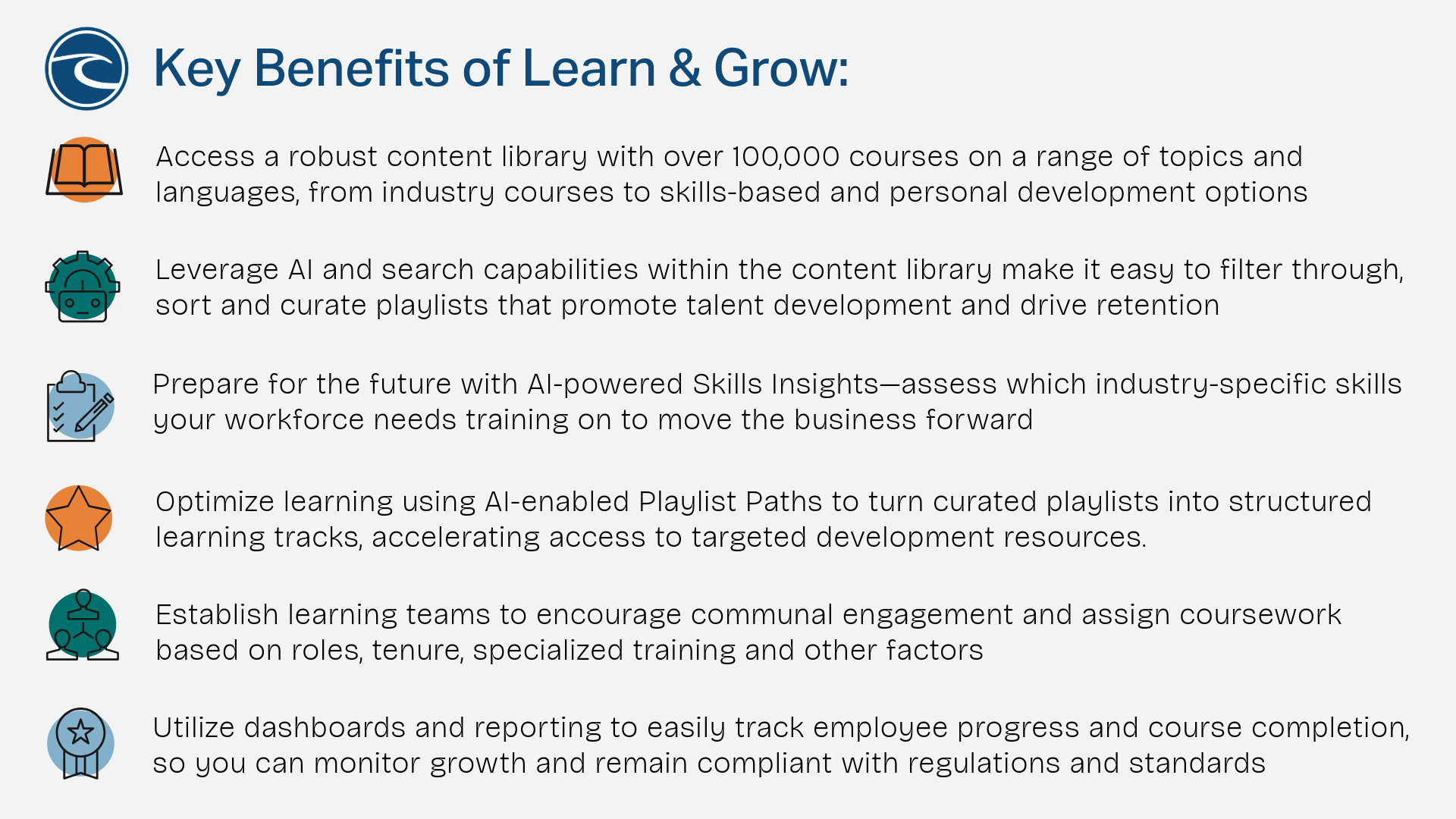
Learn & Grow removes the friction that keeps training from turning into real growth. By supporting learning across the full employee lifecycle, it helps organizations move beyond one-size-fits-all programs and toward a more intentional, connected learning experience.
With a centralized approach, teams can onboard consistently, develop managers with purpose, and reinforce performance expectations throughout the year, all while maintaining visibility into progress and growth.
A culture of learning does not happen by accident. It is designed, supported, and reinforced over time. When employees can see a clear path from onboarding to advancement, learning stops feeling like an obligation and starts feeling like opportunity.
Ready to build a learning culture that actually scales?
Let’s talk about how Learn & Grow can support your people, your managers, and your long-term growth.