Compliance issues rarely start big. They build quietly in the day-to-day, then show up all at once.
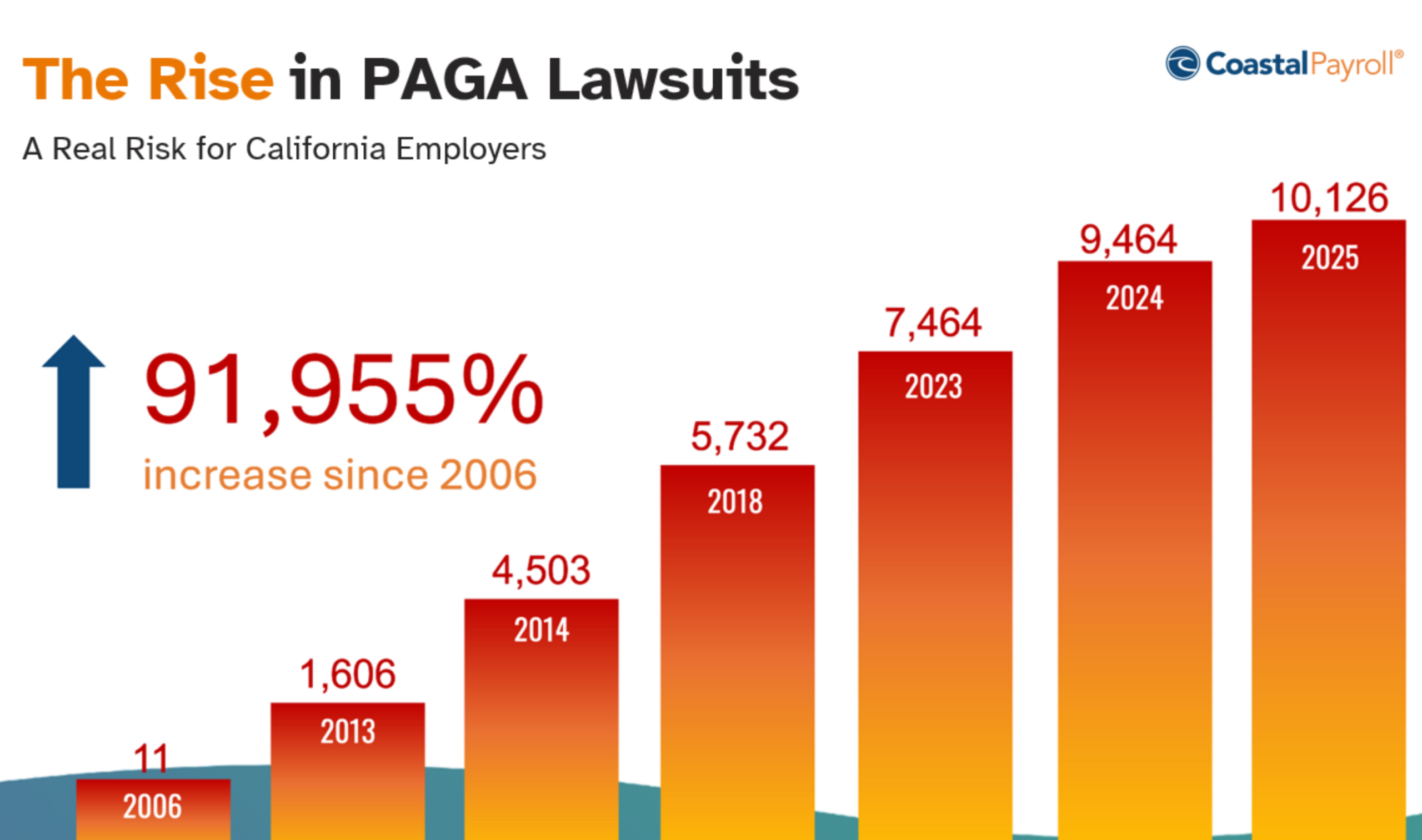
In California, one of the fastest ways that happens is through PAGA.
The Private Attorneys General Act (PAGA), passed in 2004, is often called the “Sue Your Boss” law and for good reason.
It allows employees to step into the shoes of the state and pursue penalties for Labor Code violations on its behalf.
Here’s what that actually means:
• It applies to all private California employers
• Employees can file claims in a representative capacity (similar to class action, but easier to bring forward)
• “Aggrieved employees” include anyone who experienced the violation
• Most claims center around wage and hour issues
And the financial structure adds another layer:
• 65% of penalties go to the state
• 35% go to employees
It’s not just one claim. It’s exposure across your entire workforce.
Most PAGA claims don’t come out of nowhere. They stem from everyday payroll and HR practices that drift over time.
The common thread is employees not receiving all wages they’re legally entitled to.
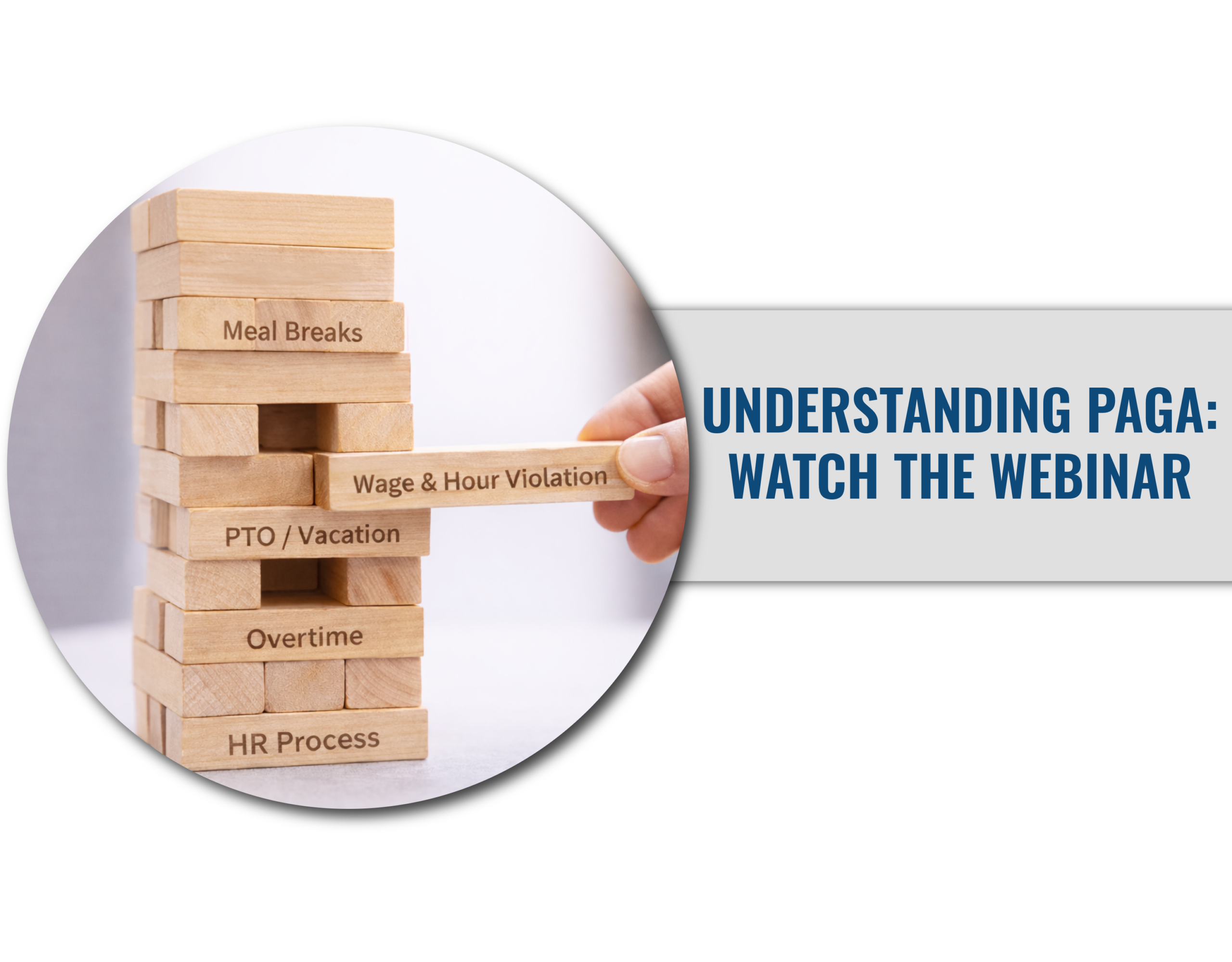
Typical triggers include:
• Misclassification (exempt vs. non-exempt)
• Misclassification of independent contractors
• Overtime issues
• Off-the-clock work
• Missed meal and rest breaks
• Minimum wage violations
• Unpaid business expenses
• Inaccurate wage statements
• Final pay errors
• Commission, tip, or piece rate issues
None of these feel dramatic on their own. But that’s exactly the problem.
One small issue can quickly open the door to multiple penalties. A simple claim often creates opportunities for plaintiffs’ attorneys to file “piggyback claims.”
For example:
An employee works through (“misses”) a lunch break. The employee is due a “meal period premium.” If you do not pay this premium (equal to one [1] hour of pay),you may also owe:
• Wage statement violation penalties
• Regular Rate of Pay (RROP) violation penalties
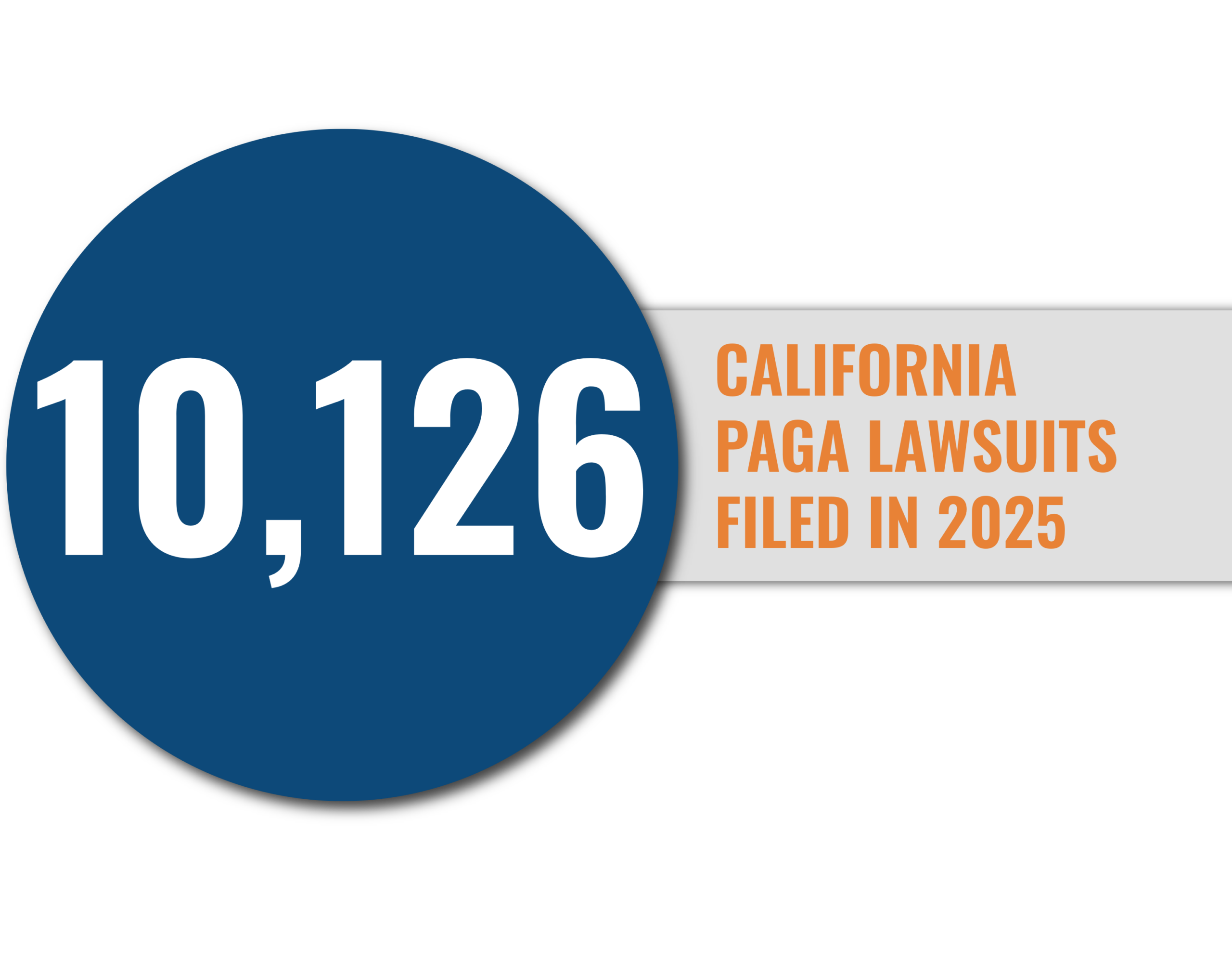
• Waiting time penalties
• PAGA penalties
Wage Statement Penalties
• $50 per employee for the first violation
• $100 per employee, per pay period after that
• Up to $4,000 per employee, plus potential attorney fees
PAGA Penalties
• $100 per employee for the first violation
• $200 per employee, per pay period for subsequent violations
Multiply that across employees and pay periods, and the numbers move quickly.
Final Pay
• Terminated employees must be paid immediately
• Employees who quit without notice must be paid within 72 hours
If missed → penalties equal one full day of pay for every day late, up to 30 days.
Meal Breaks
Non-exempt employees must receive:
• A 30-minute uninterrupted meal break for every 5 hours worked
• It must start before the end of the 5th hour
• Employees must be able to step away fully
If missed → 1 hour premium owed at the regular rate of pay
Rest Breaks
• 10-minute paid break for every 4 hours worked
• Must be uninterrupted and separate from meal periods
If missed → 1 hour premium owed
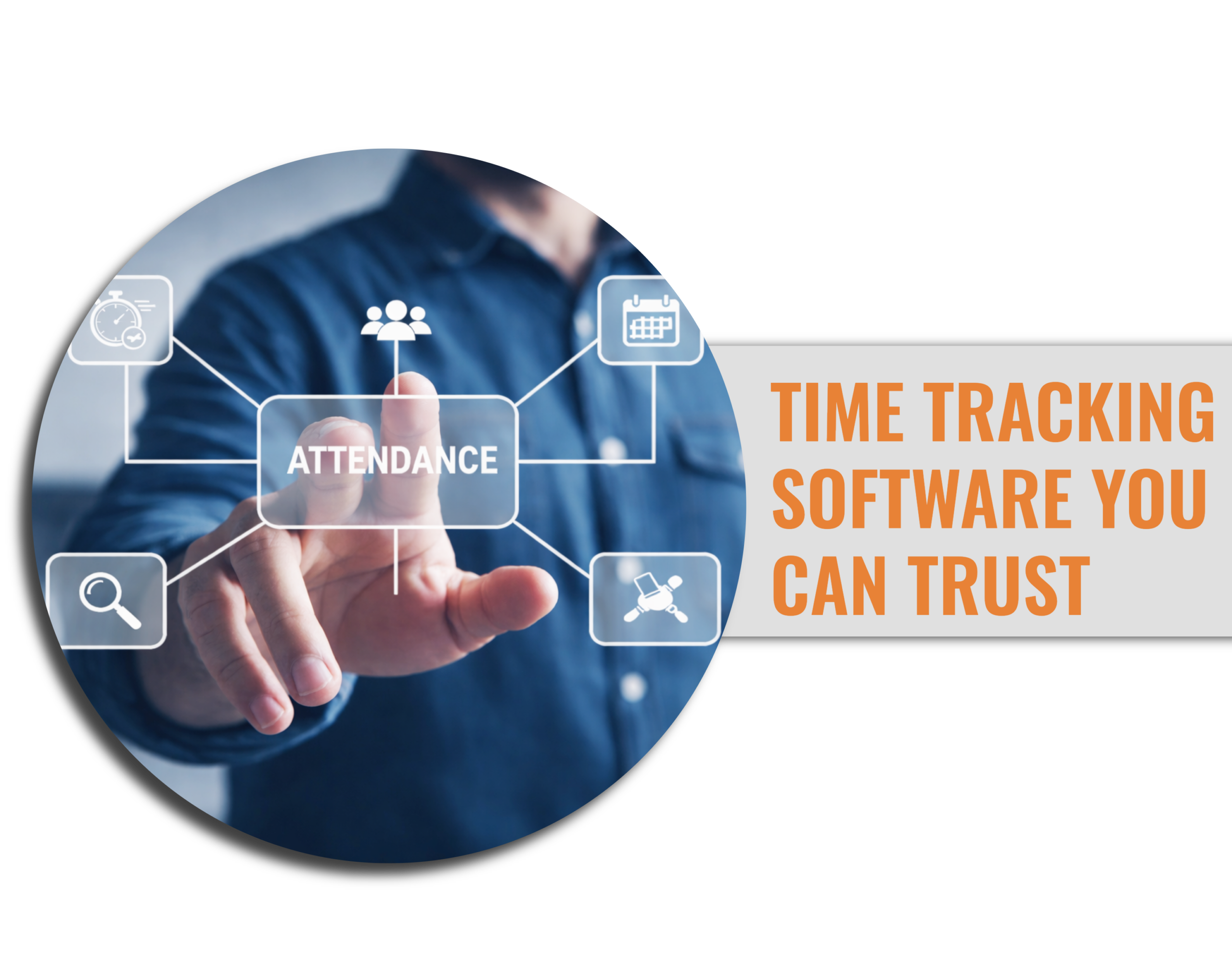
A lot of compliance risk hides in your systems.
Ask yourself:
• Does your timekeeping system handle breaks correctly?
• Are employees trained on how to clock in and out properly?
• Is time rounding creating exposure?
• Does your system account for California-specific rules?
Smart companies don’t just use software to track time. They use it to prevent issues before they happen.
That might look like:
• Preventing early clock-ins after breaks
• Adding attestation prompts
• Flagging compliance gaps in real time
If you’re not sure where to start, start here:
1. Evaluate classifications
Make sure employees are correctly classified as exempt or non-exempt, and contractors aren’t being treated like employees.
2. Audit your processes
Look at scheduling, timekeeping, payroll practices, and wage statements. Small gaps matter.
3. Train your team
Managers and employees both play a role in compliance. Make expectations clear.
4. Stay current
California employment law evolves quickly. What worked last year may not hold up today.
At Coastal Payroll, we help businesses close the gaps before they turn into claims.
With our HR Elite support, you get:
• Guidance on classifications and compliance strategy
• Help auditing policies and day-to-day practices
• Ongoing support as laws change
Paired with our technology, it’s a more complete approach. Not just tracking what happened, but helping prevent what shouldn’t. Because staying compliant shouldn’t feel reactive, it should feel under control. Let’s take a closer look at where your risks stand.
Reach out to schedule time with one of our HR consultants.