
Celebrating your team matters. Lunches, shout-outs, gift cards, those moments have value. But if we’re being honest, retention isn’t built on occasional recognition alone. It’s shaped by leadership, clarity, and consistent, daily engagement. The everyday experience is what ultimately influences whether someone chooses to stay or begins to look elsewhere.
And when employees leave, it’s not just a culture shift. It’s a real financial impact.
WHY PEOPLE LEAVE
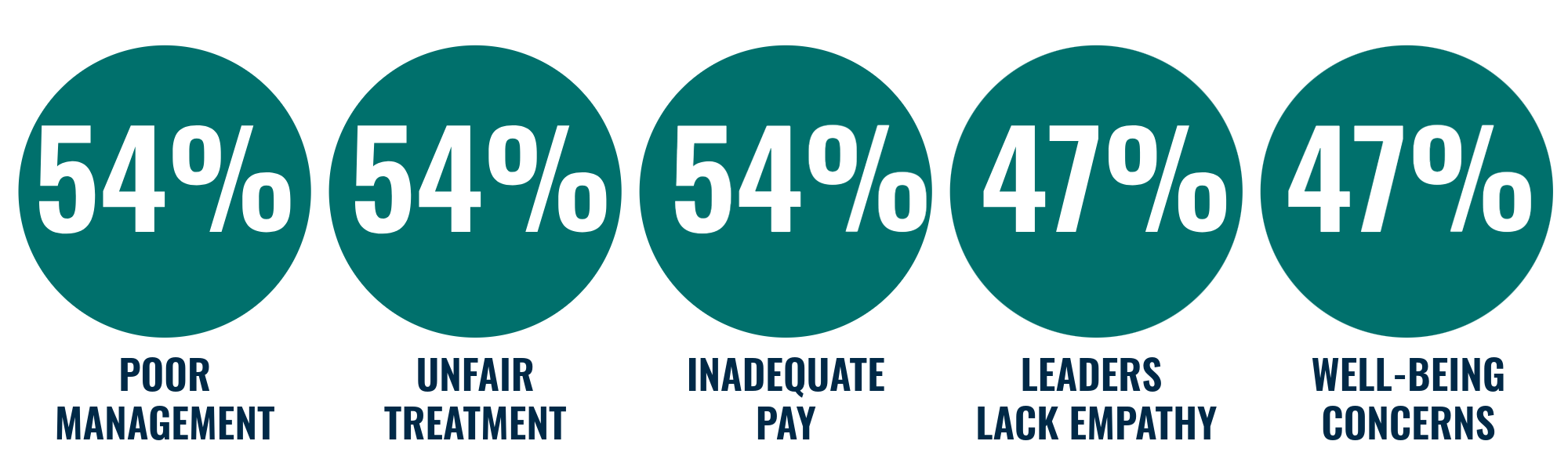
SHRM’s research makes it clear that most turnover isn’t random. It’s relational. More than half of employees cite poor management, unfair treatment, and inadequate pay as top reasons for leaving, while nearly half point to a lack of empathy and concern for well-being. The common thread isn’t perks. It’s how people are treated every day. Leadership quality, fairness, and genuine care have a direct impact on whether employees feel committed or disconnected.
HOW TO MAKE THEM STAY
1) Do not rely on salary alone. Build a well-rounded retention strategy.
.png)
Compensation matters, but it is rarely the only reason someone stays. Long-term retention is influenced by leadership quality, flexibility, professional growth, and trust. Organizations that focus solely on pay often find themselves reacting to turnover instead of preventing it.
2) Treat work-life balance as a standard, not a slogan.
Healthy boundaries should be reinforced in everyday behavior. That includes limiting after-hours communication, encouraging employees to protect personal time, and modeling sustainable workloads. Burnout often builds gradually, and proactive policies can help reduce its impact.
3) Align culture with daily behavior.
Mission and values statements should be reflected in how employees are managed and supported. When expectations, communication, and decision-making consistently reflect stated values, trust strengthens. When they do not, employees notice the gap.
4) Provide clear opportunities for growth.
Retention improves when employees understand what advancement looks like and how to achieve it. Mentorship programs, leadership development, internal mobility, and structured learning opportunities all signal long-term investment in employees’ futures.
5) Support employees with the right tools and guidance.
Technology should simplify work, not complicate it. Providing training, clear policies, and access to modern tools, including AI where appropriate, helps employees operate more efficiently and confidently. When daily processes run smoothly, engagement tends to follow.
Retention Needs More Than Good Intentions
Retention is not a one-time initiative. It's the result of consistent leadership, clear expectations, and systems that support employees at every stage of their journey.
If you want your best people to stay, it takes more than good intentions. It requires the right habits, the right leaders, and the right systems behind them. With tools like Learning Management Systems, structured Performance Reviews, and Predictive People Analytics, organizations can strengthen the everyday employee experience, identify retention risks earlier, and create meaningful growth opportunities that keep top talent engaged for the long term.
Ready to build a workplace your people want to stay in? Let’s talk.


.png)