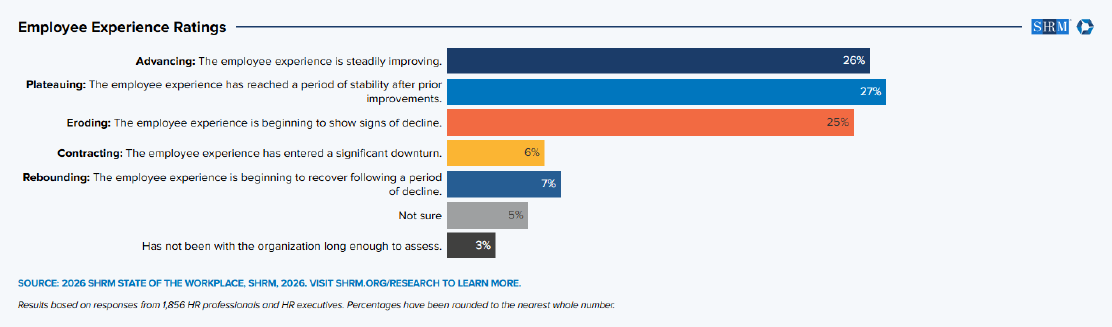
The employee experience has officially moved to the top of the priority list for HR teams in 2026. According to SHRM, nearly one-third of workers (32%) rated it as the most critical area for HR to prioritize.
But what does the “employee experience” actually mean?
At its core, it reflects how people engage with their work and how supported they feel day to day. It is shaped by everyday moments, not just major milestones. How employees receive feedback, how clearly expectations are communicated, and whether their growth is recognized all influence how they feel about their role, their manager, and their future with the organization.
When those experiences are consistent and meaningful, employees stay engaged. When they are unclear or infrequent, frustration builds. And that is where performance management plays a much bigger role than many organizations realize.
Most organizations still rely on a familiar structure: an annual or semi-annual review designed to summarize performance. On paper, it makes sense. In practice, it rarely delivers meaningful insight or momentum.
That frustration is widely shared: 95% of managers say they are dissatisfied with their organization’s performance review process.
According to SHRM, 41% of talent management executives say ensuring managers deliver objective, constructive feedback remains a major challenge. At the same time, 61% of HR professionals report that fewer than half of managers effectively address underperformance or development needs.
The message is clear: performance reviews are happening, but they are not working the way organizations intend.
The issue is that performance reviews often happen too late, without enough structure, and with far too much pressure attached.
When feedback is reserved for a single formal moment, it becomes stressful instead of helpful. Employees brace for it. Managers rush through it. And no one walks away feeling clear, supported, or energized.
Some of the most common breakdowns include:
• Bias and subjectivity, driven by recency or personality rather than performance
• Misalignment with goals, especially as priorities shift throughout the year
• Reviews tied too closely to compensation, which can limit honest dialogue
• A backward-looking focus, centered on what already happened instead of what comes next
Over time, these issues erode trust and reduce the effectiveness of the entire process.
One of the most overlooked realities of performance management is this: managers are expected to act as coaches, but few are truly set up to succeed in that role.
According to SHRM research, 60% of organizations report that managers are not provided with data-driven insights to inform performance evaluations.
Without consistent data or the right tools, managers are left to rely on instinct. That creates inconsistency across teams and fuels perceptions of unfairness, even when intentions are good. This is not a leadership failure. It’s a systems gap.
1. Move beyond annual reviews: Replace once-a-year conversations with regular check-ins that keep feedback timely and relevant.
2. Anchor reviews to clear goals: Use shared, visible goals to center conversations on progress and priorities, not personal interpretation.
3. Equip managers to coach: Provide structure, tools, and expectations so feedback feels constructive, not uncomfortable.
4. Use data to support fairness: Leverage insights to reduce bias and create consistency across teams.
5. Make feedback a two-way conversation: Invite employee input to build trust and surface challenges earlier.
6. Recognize performance consistently: Reinforce positive behaviors through ongoing recognition, not just end-of-year praise.
7. Be intentional with 360 feedback: Use multi-source input thoughtfully to add clarity, not complexity.
8. Treat performance as a living system: Adapt your approach as teams, goals, and priorities evolve.
Even the best intentions fall short without the right tools. To modernize performance management, organizations need solutions that reduce friction and support better conversations year-round.
Our performance management tool, Share & Perform, helps organizations to:
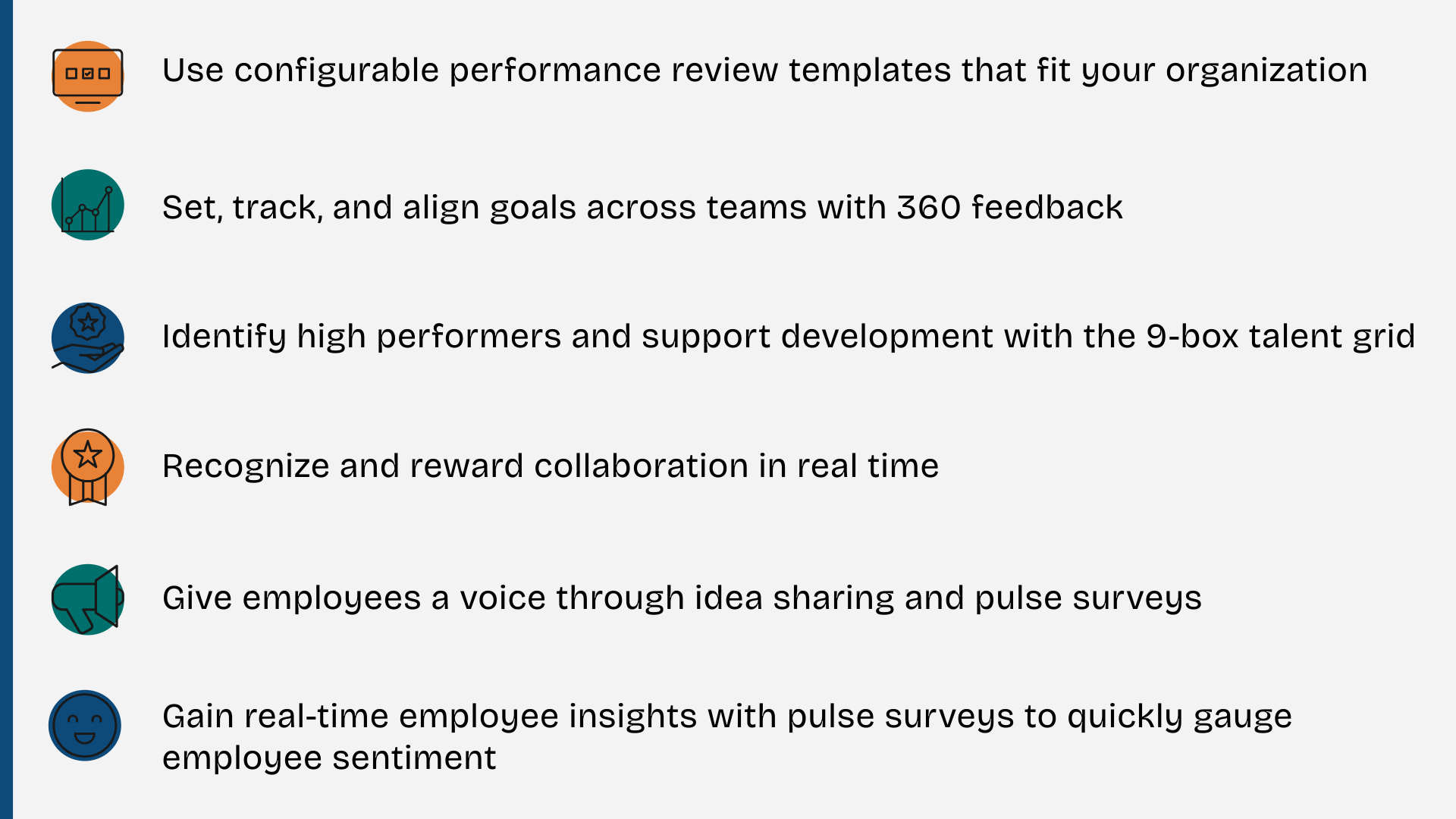
When performance tools are intuitive and connected, feedback happens more often, goals stay visible, and managers feel better equipped to lead.
Watch our Performance Management Webinar for practical tips and a look inside our Share & Perform platform.
And if you’re ready to explore what performance management could look like for your business, reach out to our team to talk through the solutions available to you.