
Mid-year performance reviews have a way of sneaking up on managers.
One minute, the year is full of fresh goals and big plans. The next, it's June, everyone is juggling competing priorities, and those goals from January may or may not still match what the business actually needs.
Performance reviews shouldn't be a check-the-box conversation. They are a chance to pause, realign, recognize progress, address roadblocks, and help employees finish the year with more clarity.
SHRM explains that effective performance reviews should do two things: evaluate performance in a clear, actionable way and support the employee’s continued development. That balance is what makes the conversation useful. It should look back, but it should also help shape what happens next.
1. Prepare before the conversation
A strong review starts before anyone sits down for the meeting.
Managers should come prepared with specific examples, not general impressions. That means reviewing goals, recent projects, key wins, missed expectations, customer or peer feedback, and any notes from previous check-ins.
This is also the time to ask a bigger question: What is really driving the employee’s performance?
A missed goal could point to a skills gap. It could also point to unclear expectations, shifting priorities, limited resources, or a process that is slowing everyone down. On the other side, strong performance may reveal habits, strengths, or behaviors worth recognizing and repeating across the team.
Before the review, managers should be ready to discuss:
What the employee was expected to accomplish
Where they are on track
Where expectations or priorities have changed
What support may be needed
What should happen next
Preparation keeps the review focused, fair, and productive.
2. Set the tone early
Performance conversations can feel heavy if employees only hear feedback once or twice a year. Managers can make the conversation more productive by opening with the right tone.
A simple opener can help:
“Today, I want to look at what is working, where we may need to adjust, and how we can set you up for a strong second half of the year.”
That kind of framing lowers the temperature and makes the conversation feel more like a reset than a report card. It also makes it clear that both the manager and employee have a role in what comes next.
3. Focus on behaviors, not personalities
Feedback lands better when it is specific, observable, and tied to the work.
Instead of saying, “You need to be more proactive,” a manager could say, “There were a few client follow-ups that needed reminders before moving forward. For the second half of the year, I would like to see you own those next steps sooner and share status updates before being asked.”
That gives the employee something clear to act on.
The same is true for positive feedback. Instead of saying, “You are a great team player,” try, “You stepped in during the onboarding project, kept the timeline moving, and made sure new team members had what they needed.”
Specific feedback helps employees understand what to continue, what to change, and why it matters. It also keeps the conversation focused on behaviors within the employee’s control, which SHRM highlights as an important part of productive performance conversations.
4. Connect feedback to impact
Managers should connect performance to the bigger picture, whether that is team productivity, customer experience, compliance, employee engagement, or business growth.
For example:
When project updates are delayed, the team has less time to adjust.
When documentation is clear, new employees ramp up faster.
When customer questions are answered quickly, trust gets stronger.
When goals are visible, employees can prioritize with more confidence.
This helps employees see how their day-to-day work connects to larger business outcomes. It also makes feedback feel less personal and more practical.
5. Make it a real conversation
A review should not be a manager talking at an employee for 30 minutes.
Employees need space to share their perspective, ask questions, and speak up about what may be getting in the way. This matters because managers may not always have the full picture. A performance issue could be tied to workload, unclear priorities, training needs, or even a management style that is not working for that employee.
Helpful questions to ask include:
What accomplishment are you most proud of so far this year?
What has been the biggest challenge?
Are there any priorities that feel unclear?
Where do you need more support?
What skills do you want to keep building?
What would help you be more successful in the next six months?
Gallup has found that meaningful feedback is closely tied to engagement, which is why performance conversations should not feel like a once-a-year event. They should be part of how managers support and develop their teams.
6. Revisit goals and reset priorities
Mid-year reviews are the perfect time to confirm what still matters, what needs to shift, and what success should look like moving forward. If priorities have changed, say so. If a goal is no longer relevant, update it. If an employee needs more support, define what that support looks like.
Employees should leave the review knowing:
What to keep doing
What to improve
What goals have changed
What support is available
How progress will be measured
Clarity is the win here. When employees know what matters most, they can spend less time guessing and more time moving in the right direction.
7. End with next steps
The most important part of a performance review is what happens after it.
Before the conversation ends, managers and employees should agree on clear next steps, including updated goals, development opportunities, support needed, and follow-up timing.
A simple action plan can include:
One or two priorities for the next 30 to 60 days
Any resources, training, or coaching needed
How progress will be measured
A date for the next check-in
SHRM notes that reviews have the greatest impact when they are followed by ongoing feedback and progress check-ins. In other words, the mid-year review should start momentum, not end the conversation.
Make performance reviews easier to manage
A strong mid-year review gives employees more than a score. It gives them direction.
It helps managers recognize great work, coach through challenges, and reconnect individual goals to business priorities. It gives employees clarity on what is expected, confidence in where they stand, and a better understanding of how to move forward.
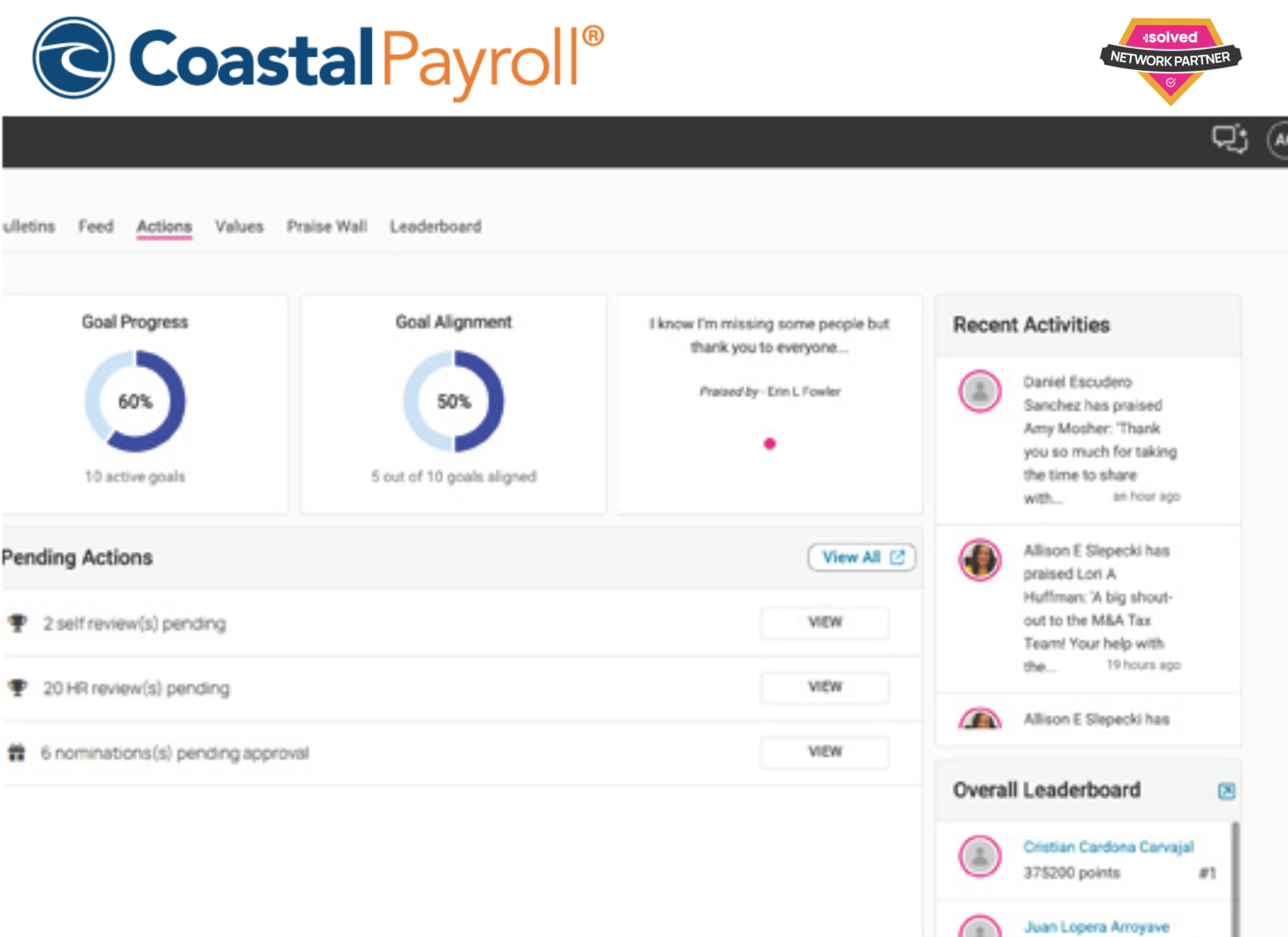
Of course, even the best performance strategy can fall flat without the right tools in place. When review templates are hard to manage, rating scales are inconsistent, or feedback is scattered across documents and inboxes, the process can quickly become more complicated than it needs to be.
.png)
With our performance tools, businesses can create, launch, and manage performance reviews with more consistency and less manual work. Customizable templates, flexible rating scales, mobile-responsive tools, and dynamic review cycle setup make it easier for managers and employees to give and receive meaningful feedback, whether teams are in the office or on the go.
With the right process and the right tools, performance reviews can become one of the most valuable conversations your team has all year. Reach out to learn more.


.png)